03
Vacuum Sanitation · Toilets
Vacuum Toilet System
Flush toilets that use suction instead of a gravity cistern — removing waste with a minimal 0.5 to 1.5 litres of water, in Indian and European style models.
0.5–1.5LWater per flush
2Indian & European models
24VDC+ compressed air
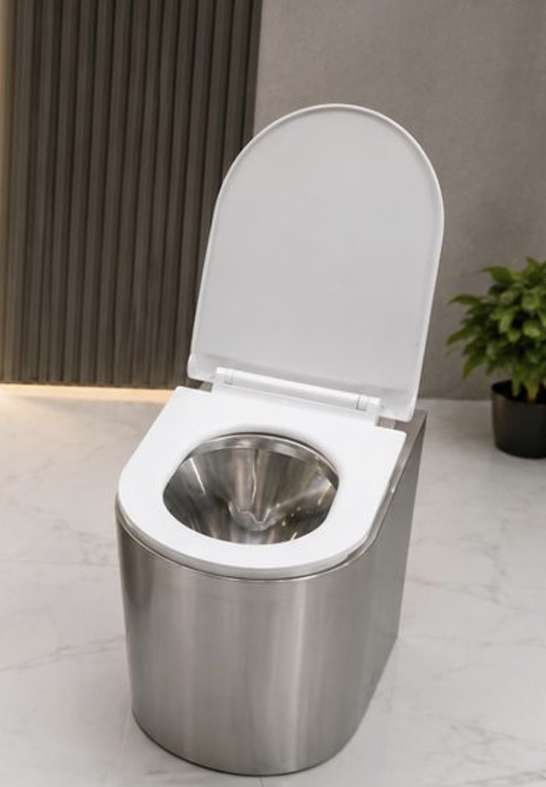 Made in India · UTC Original Design
3D Engineering RenderVacuum Toilet Unit
02
Engineering Views
Designed in-house, down to the valve.
Every unit carries UTC's original design — a stainless bowl, pneumatic flush valve and electronic control packed into one compact assembly.
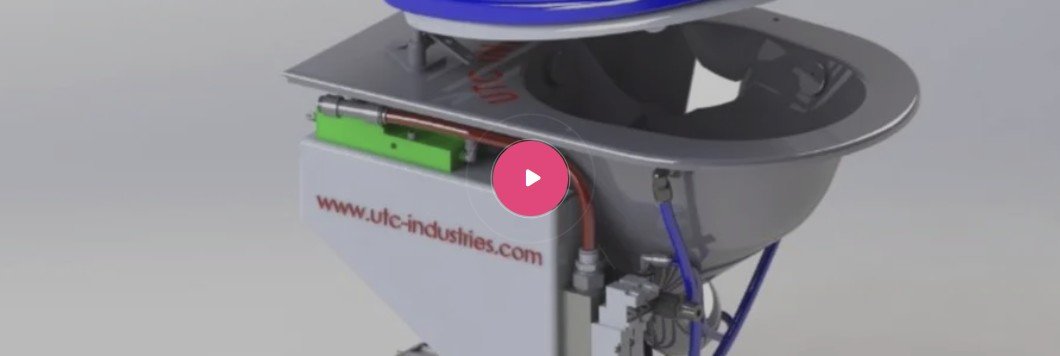
Watch
The vacuum flush in action
05
Application · Road
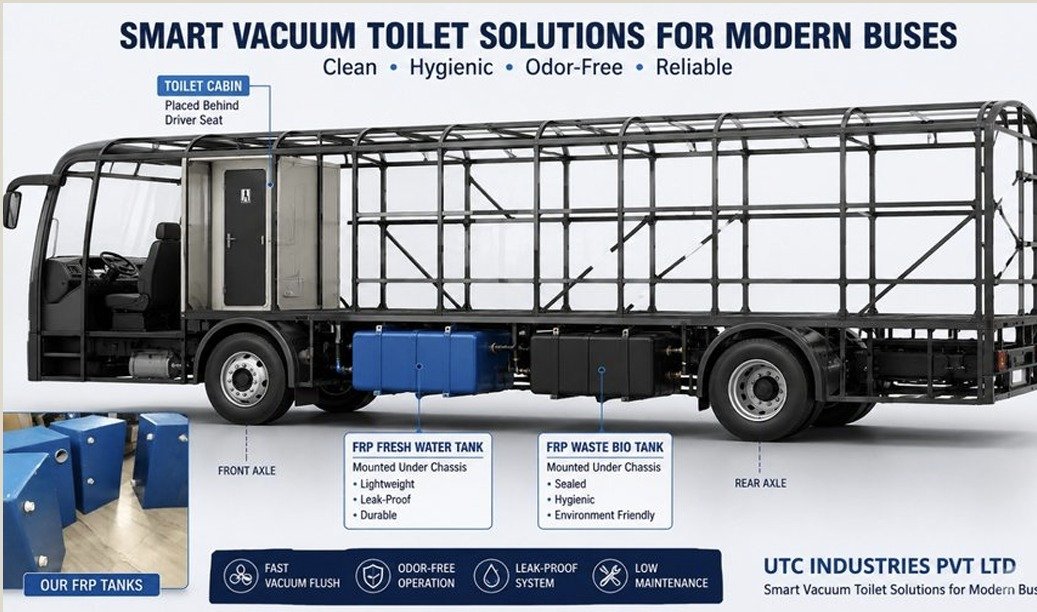
Vacuum toilets on the move.
The same vacuum-flush system built into a bus — a self-contained toilet cabin with its own fresh-water and waste tanks, running the same low-water flush on the move.
- 1Toilet CabinPlaced behind the driver seat
- 2FRP Fresh Water TankUnder chassis · lightweight, leak-proof, durable
- 3FRP Waste Bio TankUnder chassis · sealed, hygienic, environment friendly
Fast Vacuum FlushOdor-Free OperationLeak-Proof SystemLow Maintenance
Vacuum Toilet System