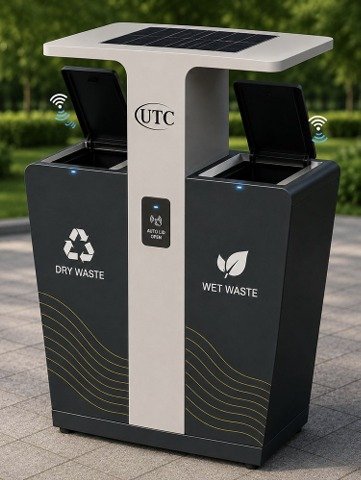
Model 01
Dual-Bin Solar Smart Dustbin
Dry / wet waste segregation with an auto-lid sensor — a wave opens the lid without anyone touching it.
A street-side waste bin that runs entirely off a rooftop solar panel — no mains power or wiring needed. An internal ram compacts the waste, so one bin holds several times what an ordinary bin can.
Solar-Powered · Make in India
The UTC solar-powered trash compactor holds up to 5 times more waste than a non-compacting bin — reducing collection frequency by up to 80%.
Compatible with standard 120L and 240L wheelie bins for easy and safe trash removal.
Fullness sensors and data collection help plan optimised collection routes.
Reduced waste volume leads to fewer collections and lower costs.
Decreased fuel emissions and landfill pressure, and public spaces with less litter and odour.
Fullness sensors and data collection for optimised routes — contributing to a more sustainable, hygienic smart city.
Already deployed in cities including Agra under the Swachh Bharat programme — fewer collection trips, lower fuel and labour costs for the municipal team, and a cleaner street between pickups, with segregation built in from the moment something is thrown away.
Model 01
Dry / wet waste segregation with an auto-lid sensor — a wave opens the lid without anyone touching it.
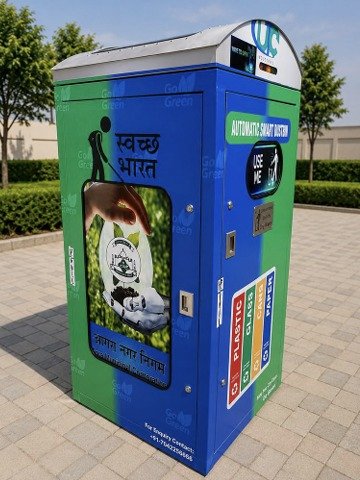
Deployed · Agra
Deployed under Swachh Bharat for Agra Municipal Corporation — multi-stream segregation for plastic, glass, cans and paper.
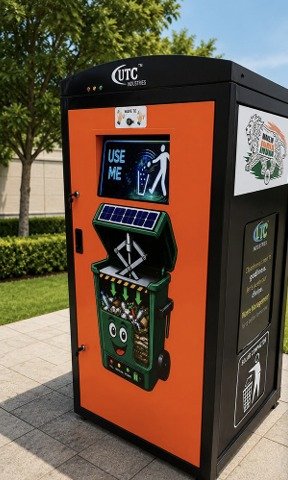
Model 03
An internal ram presses the waste down so the bin holds several times more before it needs emptying — a “Make in India” build.
Fewer collection trips by garbage trucks means less fuel consumption and lower greenhouse gas emissions.
Compacting waste increases the capacity of bins, reducing the strain on landfills and the need for new ones.
The units run on clean, renewable solar energy, eliminating the need for fossil fuels to power the compaction process itself.
Holding more waste and compressing it helps prevent bins from overflowing, leading to cleaner streets.
Sealed units and compaction minimise contact with waste, controlling pests, flies and odours for more hygienic public areas.
Replacing multiple traditional bins with a single compactor makes them ideal for high-traffic areas and locations with limited public space.
Real-time data from UTC smart sensors gives a better understanding of waste-generation patterns, helping cities optimise bin placement and collection strategies.
Smart, clean units encourage more responsible waste-disposal habits among the public.
Integrated with larger waste-management systems, these compactors are key components of efficient, sustainable smart-city infrastructure.
Tell us the location, number of units and waste streams to segregate — our team will recommend the right model and share specifications.